


Why You Should Embrace the AI Worry: It's Not a Threat, It's a Library
- JCI GDRIVE
- 17 hours ago
- 4 min read
Everyone's worried about AI. I get it. The headlines sound like the opening act of a dystopian thriller: "AI Takes Creative Jobs," "ChatGPT Replaces Writers," "Machines Will Soon Outthink Humans." It's enough to make anyone in communications, entertainment, or business want to unplug and move to a cabin in Montana.
But here's the thing: we're asking the wrong question.
The real question isn't "Will AI replace me?" It's "Why am I still living in an information bubble when the greatest knowledge-expansion tool in human history is sitting right in front of me?"
The Actual Problem: Your Circle Is Too Small
Most people: even smart, accomplished professionals: operate in a pretty tight orbit. You've got your family, your friends, your industry colleagues, maybe a handful of trusted news sources, and that one subreddit you check way too often. That's your information ecosystem.
And it's tiny.
Not because you're lazy or uncurious. But because there are only so many hours in a day, and the friction of learning something new: finding credible sources, sorting through junk, cross-referencing perspectives: takes real effort.
So we stay in our lanes. We read the same voices. We consume the same narratives. We think we're informed, but really, we're just consistently informed about a narrow slice of reality.
AI doesn't replace that. It explodes it.

AI Isn't a Threat. It's the World's Most Patient Research Assistant
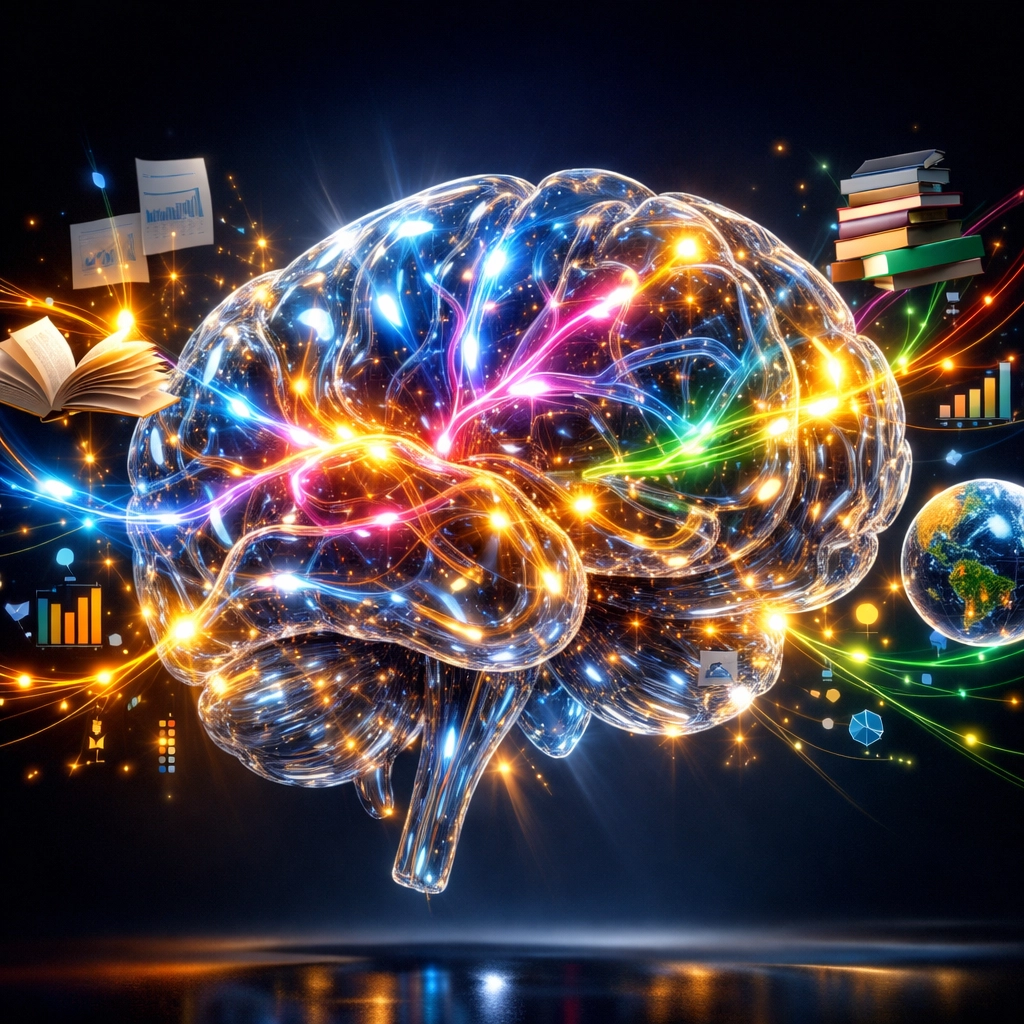
Think of AI as the ultimate librarian who never sleeps, never judges your questions, and can pull together perspectives from medicine, history, urban planning, climate science, behavioral economics, and 47 other fields in about 11 seconds.
Want to understand the geopolitical implications of rare earth mineral mining in the Congo? AI can synthesize that for you: and connect it to supply chain vulnerabilities, human rights concerns, and clean energy policy debates.
Curious how neuroscience research on decision-making could inform your crisis communications strategy? You can get a primer without enrolling in grad school.
Need to know what activists in three different states are saying about a regulatory issue your client is facing? AI can help you map the landscape faster than a team of interns with highlighters.
This isn't about automation. It's about augmentation.
You're not outsourcing your thinking. You're expanding your ability to think better: because you suddenly have access to knowledge that used to require a PhD, a library card, and six months of free time.
Why Communications Professionals Should Be the Most Excited
If you work in PR, public affairs, or stakeholder engagement, AI should make you giddy. Here's why:
1. You can finally understand the full playing field. Most communications crises don't happen because the facts weren't available. They happen because the team didn't know what they didn't know. AI helps you see around corners: anticipate the narratives, understand the stakeholders you've never engaged with, and map the second- and third-order consequences of a decision before you hit "send" on that press release.
2. You can craft smarter, more empathetic messages. AI lets you explore how different audiences think, what language resonates in different communities, and what concerns are bubbling under the surface before they hit the headlines. That's not manipulation: that's competence.
3. You can stop being reactive and start being strategic. Instead of scrambling when a story breaks, you can use AI to run scenario planning, pressure-test your messaging, and identify vulnerabilities in your narrative architecture. You become the team that's three steps ahead, not three steps behind.
The Knowledge Expansion You Didn't Know You Needed
Here's a real-world example: A few months ago, I was working on a project involving local housing policy. Standard stuff: zoning, affordability, neighborhood pushback. But when I started using AI to explore adjacent issues, I stumbled into urban heat island research, climate resilience planning, and public health data on housing stability.
Suddenly, the "housing policy project" wasn't just about zoning. It was about equity, climate adaptation, and multigenerational health outcomes. The messaging shifted. The stakeholder map expanded. The story got richer.
That's what happens when you stop treating AI like a shortcut and start treating it like a bridge to knowledge you wouldn't have encountered otherwise.
The Fear Is Real. The Solution Is Also Real.
Look, I'm not saying AI doesn't come with risks. It absolutely does. Bias in algorithms, misinformation at scale, job displacement in certain sectors: these are legitimate concerns, and they deserve serious attention.
But hiding from AI because you're scared of what might happen is like refusing to learn email in 1998 because you heard about spam.
The people who win in the next decade won't be the ones who avoided AI. They'll be the ones who learned to use it strategically, ethically, and thoughtfully to make better decisions, tell better stories, and build deeper understanding of the complex world we're navigating.
And honestly? If you're in the business of communications, public affairs, or reputation management, you're already in the business of making sense of complexity. AI just gave you a superpower.

So What Do You Actually Do?
Start small. Pick one thing you've been meaning to learn more about: an industry trend, a policy issue, a demographic shift: and spend 20 minutes with AI exploring it. Not to replace your own thinking, but to expand the raw material you have to think with.
Ask it to explain things like you're switching careers. Ask it to compare perspectives from different disciplines. Ask it to help you see the issue from the point of view of someone who disagrees with you.
Then take that expanded knowledge and do what you've always done: apply judgment, add context, connect dots, tell the story.
The worry about AI is understandable. But the opportunity is bigger.
AI isn't here to replace your brain. It's here to make your brain more powerful.
And if you work in communications: where knowledge, speed, and empathy are the most valuable currencies: that's not something to fear.
That's something to embrace.
Ready to expand your knowledge ecosystem? Whether you're navigating a complex public affairs challenge or just trying to make sense of the shifting media landscape, JCI Worldwide helps organizations cut through the noise and communicate with clarity. Let's talk strategy.