.png)
The Numbing of America: Why We've Stopped Reacting to the Unthinkable

Here's a question that keeps me up at night: When did we stop being shocked?
Another school shooting scrolls across our feeds. We pause, maybe sigh, then keep scrolling. ICE agents detain children at their schools, and the outrage lasts about 48 hours before the next crisis takes over. Natural disasters devastate entire communities, and we've moved on before the floodwaters recede.
This isn't normal. Or at least, it shouldn't be.
The Violence We've Learned to Live With
Let's take stock of where we are. School shootings have become so routine that they barely crack the top of the news cycle unless the body count is particularly high. Think about how disturbing that sentence is. We've created an informal threshold for tragedy, a number of deaths required before we collectively pay attention.
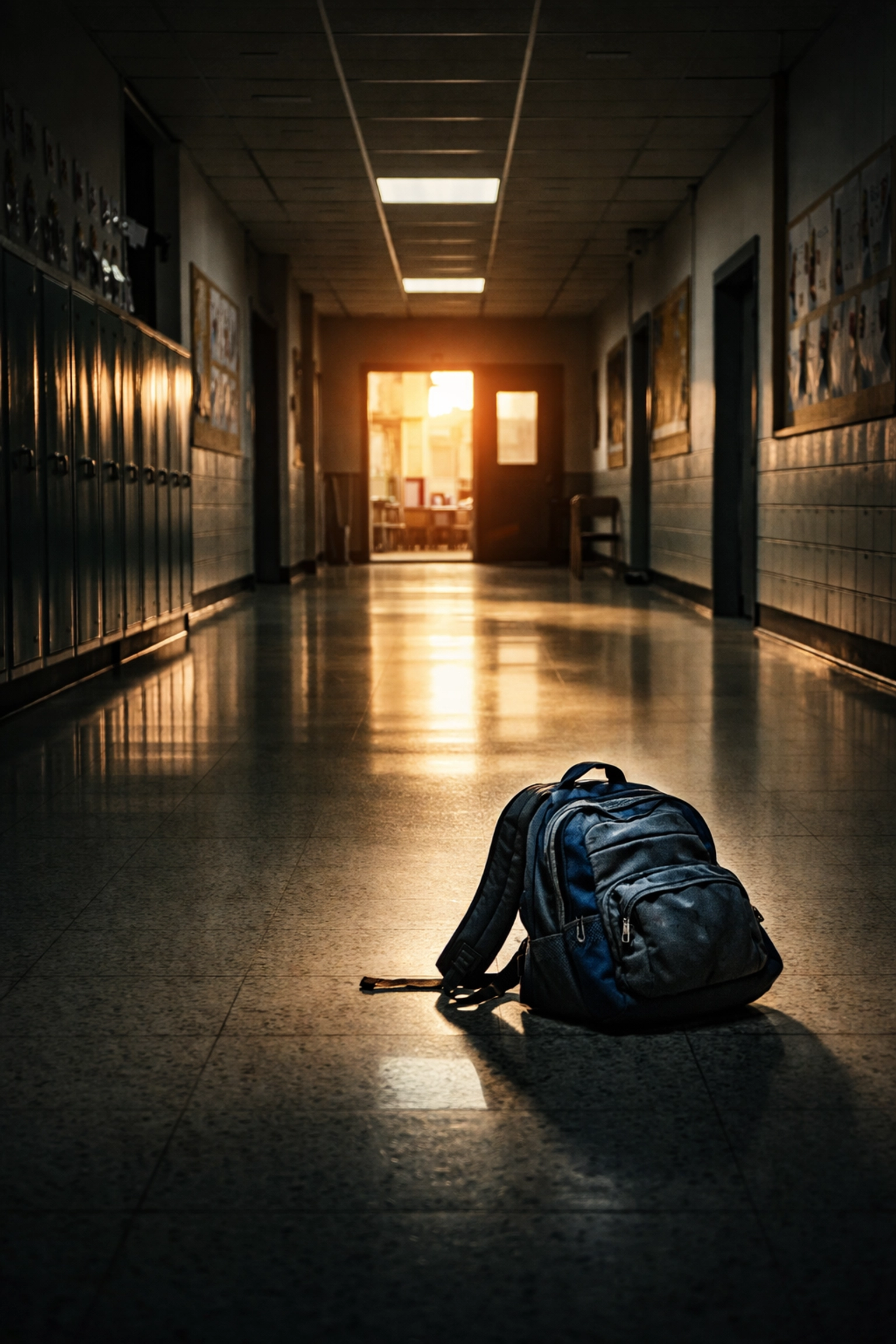
ICE raids pull parents from their families, sometimes detaining children directly from school grounds. Foreign policy decisions lead to military actions that claim civilian lives overseas. Natural disasters, hurricanes, wildfires, floods, ravage communities with increasing frequency and intensity.
And through it all, we keep scrolling.
The crisis communications industry has never been busier, because crises have never been more constant. But here's the paradox: the more crises we face, the less each individual crisis seems to matter.
Was It Always Like This?
Short answer: No.
In the 1950s, 60s, and 70s, Americans consumed news very differently. You got your morning paper. You watched the evening news: Walter Cronkite telling you "that's the way it is" at 6:30 PM. That was it. News was episodic, scheduled, and finite.
When something truly shocking happened: the Kennedy assassination, the King assassination, the Kent State shootings: the nation experienced it together. There was time to process, to grieve, to demand answers. The images from Vietnam that finally turned public opinion against the war? They had impact because they weren't competing with a thousand other images for our attention.
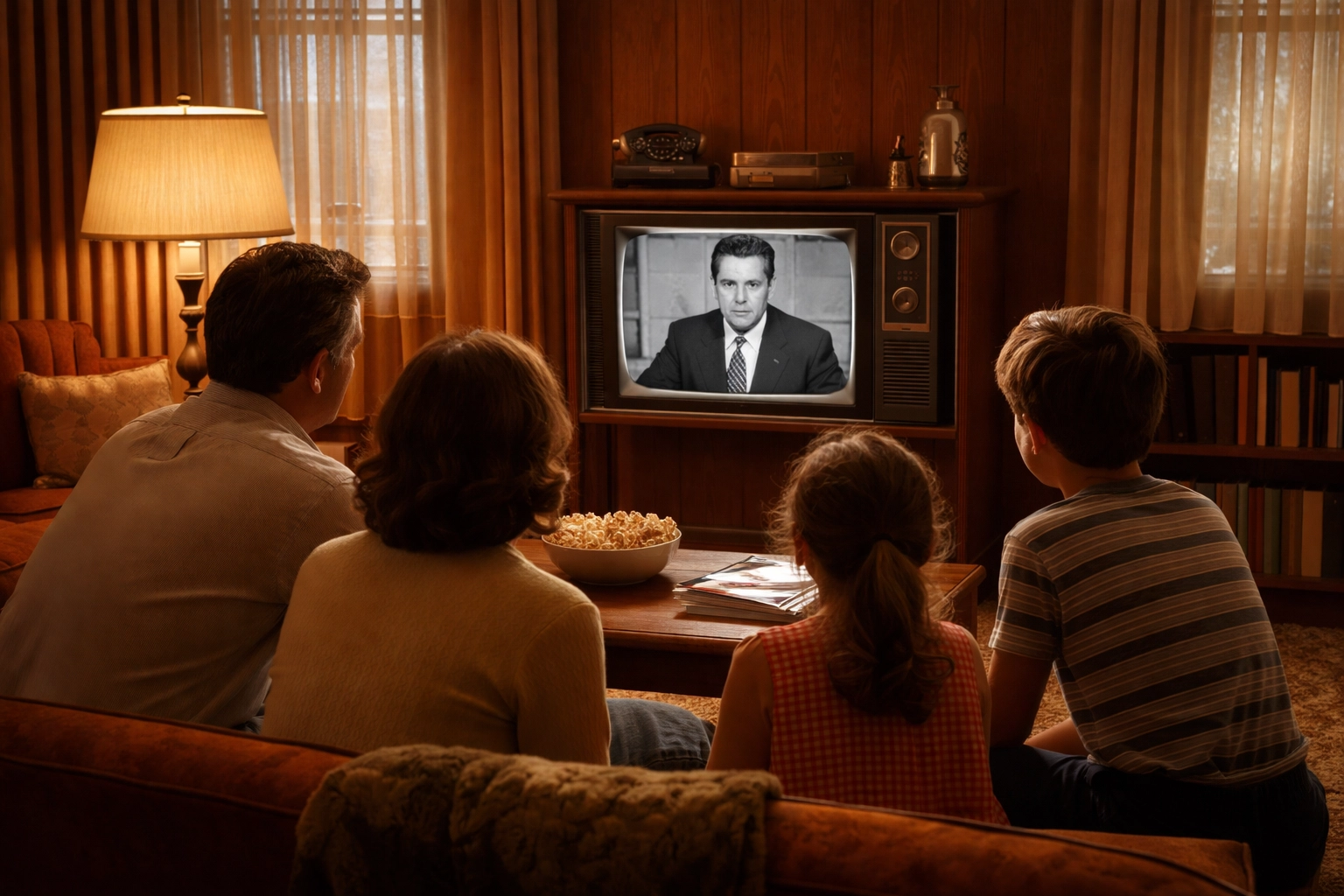
Today's media landscape couldn't be more different. We're swimming in a 24/7 ocean of information, notifications, breaking news alerts, and algorithmic content designed to keep us engaged: which often means keeping us outraged or afraid.
The challenge for advocacy communications professionals has fundamentally shifted. It's no longer about getting attention; it's about cutting through the noise long enough to actually change minds or move people to action.
The Psychology of Numbness
There's actually a name for what's happening to us: psychic numbing. Researchers have found that our capacity for empathy doesn't scale with the magnitude of tragedy. One death can devastate us. A thousand deaths becomes a statistic.
And this isn't just a vibe. Research on media exposure and desensitization points in the same direction. Scharrer (2008) found evidence that heavier local TV news exposure is associated with reduced emotional sensitivity to violent news. Krahé et al. (2011) linked habitual exposure to media violence with lower physiological arousal (a classic marker of desensitization) when viewing violent content. And Silver and colleagues (2019) described how repeated media exposure to mass violence can lock people into a cycle of distress: we watch because we’re anxious, and we get more anxious because we watch, until the feelings dull into something closer to shutdown than action.
Add to this the phenomenon of compassion fatigue. Our brains simply aren't built to care about everything all the time. When we're bombarded with tragedy after tragedy, our emotional circuits start to shut down as a protective mechanism.
Gerbner’s cultivation theory: often summarized as “Mean World Syndrome”: helps explain the emotional trajectory a lot of us seem to follow. Heavy exposure to a steady stream of danger can cultivate a worldview where the world feels consistently threatening. At first, that can look like fear. Over time, it can drift into apathy: a defensive posture that says, “Of course something terrible happened. That’s just the world now.”
Social media amplifies this in insidious ways. The same platform showing you a devastating school shooting will, three swipes later, show you a funny cat video. The emotional whiplash trains us to feel less deeply about everything.
For those of us working in policy communications, this presents a genuine ethical challenge. How do you advocate for urgent action when your audience has been numbed into passivity?
A Generation Growing Up Numb
Here's what really worries me: What does this do to young people?
Kids today have never known a world without school shooting drills. They've grown up watching adults argue about whether the latest tragedy warrants action, only to watch nothing change. They've learned, through observation, that mass violence is just... a thing that happens.
The psychological implications are profound. Studies suggest that constant exposure to violence and trauma: even secondhand through media: can affect developing brains in lasting ways. We're essentially running a massive, uncontrolled experiment on an entire generation.
And the learned helplessness may be the most damaging part. When young people see crisis after crisis met with thoughts and prayers but no systemic change, they internalize a message: nothing you do matters. Why engage? Why care? Why vote?
This is perhaps the greatest public relations challenge of our era: not selling a product or managing a reputation, but somehow reconnecting a disconnected society with its own capacity for collective action.
Breaking Through the Numbness
So what do we do? How do we: as communicators, as citizens, as humans: break through?
First, we need integrated communications solutions that go beyond the news cycle. Sustained campaigns that keep issues alive even when the algorithms have moved on. Building communities of engagement rather than just audiences for content.
Second, we need to make the abstract personal. Statistics numb us; stories connect us. One child's experience can move hearts in ways that data about thousands cannot.
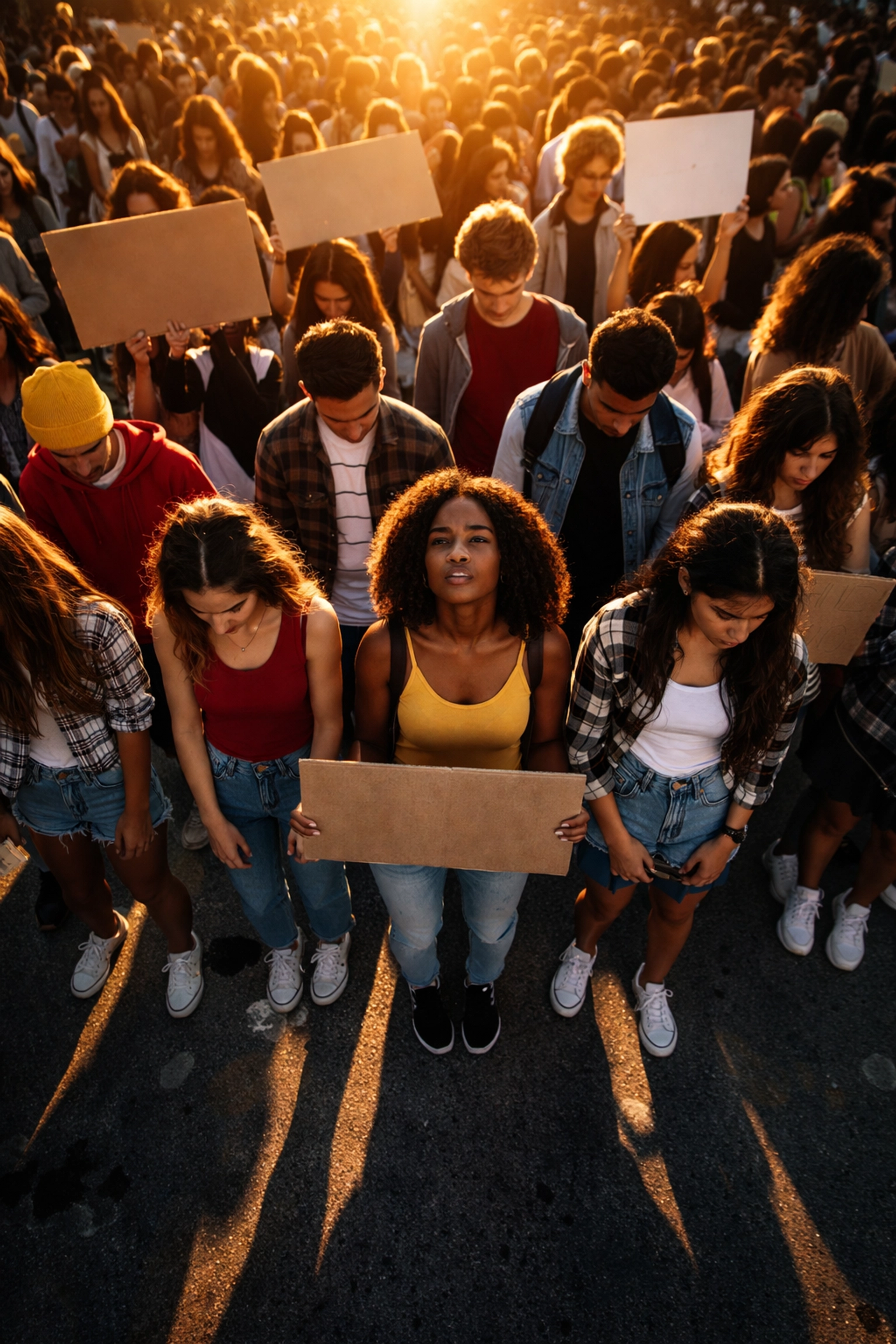
Third, we need to be honest about what we're up against. The attention economy profits from our outrage but not from our action. Meaningful change requires sustained focus that the current media ecosystem actively works against.
Finally, we need to model a different way of engaging: especially for young people watching how adults respond to crisis. They need to see that caring isn't naive, that action isn't futile, that the numbness isn't inevitable.
The Stakes
Here's the uncomfortable truth: A numb society is a society that can be led anywhere. When we stop reacting to the unthinkable, the unthinkable becomes normal. And once something is normal, it's almost impossible to change.
The violence we're seeing isn't going away on its own. The crises will keep coming. The question is whether we'll meet them as engaged citizens or passive consumers.
I don't have all the answers. But I know this much: The first step to feeling again is acknowledging that we've stopped. That we've been numbed. That somewhere along the way, we lost our capacity for collective outrage: and with it, our power to demand something better.
The question isn't whether America can wake up. It's whether we still want to.


Comments