


Why Global PR Giants Are Going Local: The Death of the DC-Centric Strategy
- JCI GDRIVE
- 1 day ago
- 5 min read
If you've spent any time watching what's happening in Washington lately, you know the playbook is broken. Bills stall. Agencies contradict each other. Leadership changes every election cycle, and the gridlock is so predictable it's boring.
Which is exactly why the smartest public affairs firms in the country have stopped pretending DC is where the real game is played.
Over the past two years, we've watched multinational PR and public affairs agencies snap up local boutique firms in states across the U.S., not as satellite offices, but as strategic anchors. These aren't vanity acquisitions. They're survival moves. Because while DC was busy being dysfunctional, policy influence quietly relocated to city halls, state capitols, and county board meetings.
All politics is local. And right now, that's not a cliché, it's the entire strategy.

The Real Power Moved While No One Was Looking
Here's what changed: when federal action became unreliable, state and local governments stepped in. Climate policy? California and New York wrote the rules. Healthcare access? Governors made the calls. Housing affordability, workforce development, criminal justice reform, those fights are happening in Sacramento, Austin, Lansing, and Tallahoma, not the Beltway.
And here's the part that should scare anyone still running a DC-first public affairs strategy: the stakeholders who move those decisions don't care about your firm's K Street address.
They care about whether you know the mayor. Whether you've testified at a planning commission hearing. Whether your team has relationships with the local labor council, the neighborhood associations, and the reporters at the metro desk who actually cover city government.
You can't fake that from 2,000 miles away.
Why Trust Only Travels in Small Circles Now
We're living in what everyone politely calls "the age of uncertainty." Trust in institutions is at historic lows. Federal agencies contradict themselves mid-crisis. Corporate spokespeople get caught in poorly-timed retractions. The information environment is a dumpster fire.
In that world, people default to trusted messengers, and those messengers are almost always local.
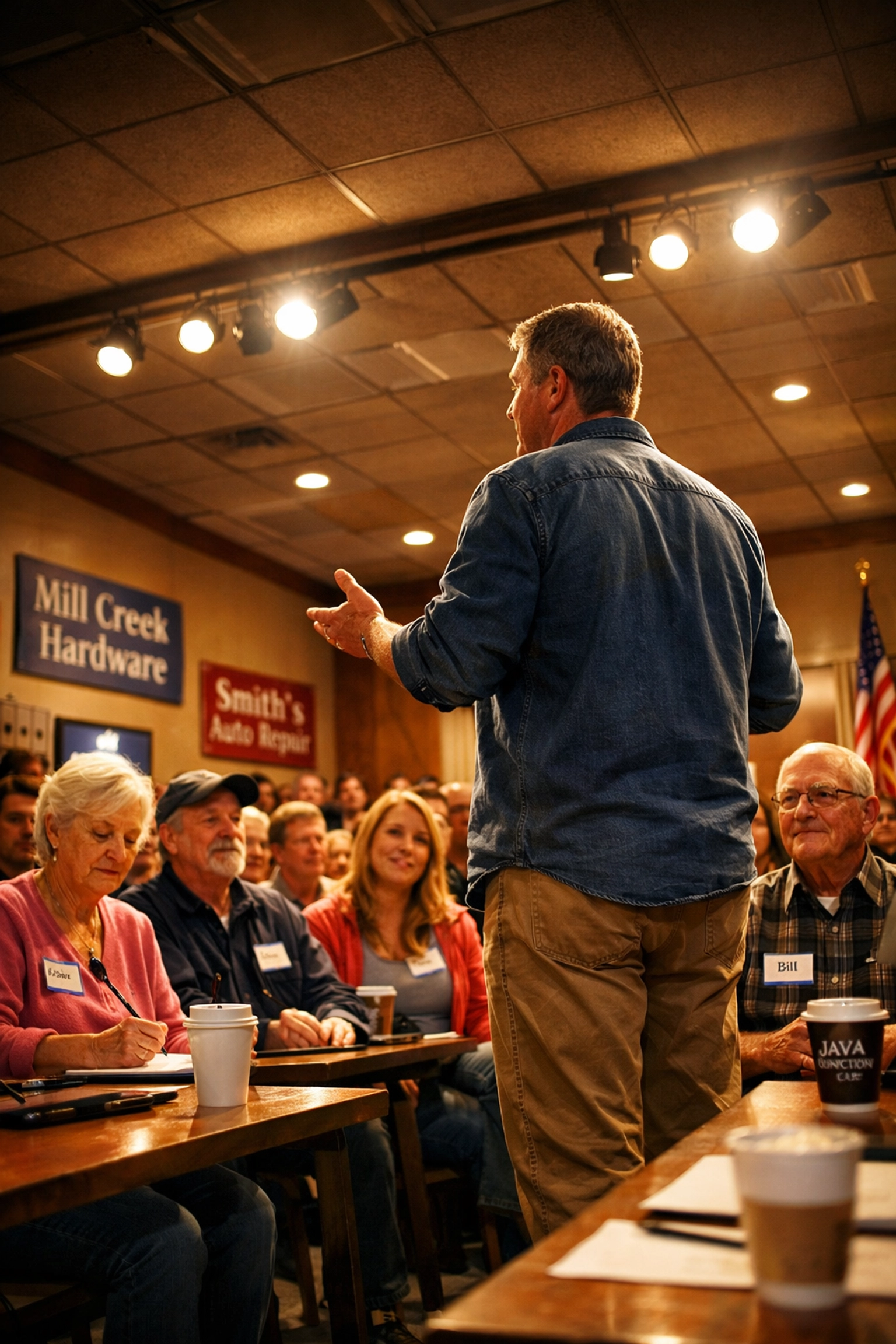
It's the city councilmember who shows up at the farmer's market. The business owner who's been on Main Street for 30 years. The nonprofit director everyone knows by first name. These are the voices that carry weight when a controversial project needs community support or when opposition is organizing against a ballot measure.
Big agencies used to think they could parachute in, deploy some polished talking points, and call it stakeholder engagement. That doesn't work anymore. Communities can smell inauthenticity in about 90 seconds, and once you lose credibility, you don't get it back.

Hyper-Local Activism Is the New Lobbying
Traditional lobbying still exists, obviously. But the center of gravity has shifted to hyper-local activism, grassroots organizing that's faster, cheaper, and way more effective than trying to move a bill through Congress.
Think about it: a well-organized neighborhood group can kill a zoning change in three public comment periods. A coalition of small businesses can flip a county vote on tax incentives. Local unions can determine whether a construction project gets built on time or gets tied up in labor disputes for two years.
This is where stakeholder engagement strategies actually matter. Not in the abstract "let's build relationships" sense, but in the very concrete "do we know who runs the local chamber, and can we get a meeting this week" sense.
Global firms are buying local agencies because they finally realized you can't rent this kind of credibility. You have to own it. You need people on the ground who've been doing policy communications in that market for a decade. Who know which community leaders to call when a crisis breaks. Who understand the political dynamics that don't show up in any briefing memo.
What "Glocal" Actually Means (And Why It's Not Just Buzzword Nonsense)
The industry loves the term "glocal", global strategy, local execution. It sounds like consultant-speak, but it's actually the only model that works now.
Here's the reality: if you're a Fortune 500 company trying to build infrastructure, launch a new facility, or navigate regulatory approval, you need both the resources of a major firm and the on-the-ground expertise of people who live in that community.
You need someone who can coordinate a national campaign. And you need someone who knows that the planning commissioner in District 3 is the swing vote and his biggest issue is traffic congestion, not climate impact.
You need the big-picture narrative. And you need the hyperlocal translator who can make that narrative mean something to the people who will actually decide your fate.
The firms that are winning right now are the ones that figured this out early. They didn't try to force a one-size-fits-all approach from headquarters. They empowered regional teams. They hired people with real roots in their markets. They stopped pretending you can run effective public affairs consulting from a conference room in DC.
The DC-Centric Strategy Isn't Dead, It's Just Not Enough Anymore
Look, federal work still matters. There are still regulations to track, agencies to engage, and yes, occasional legislation that actually passes. No one's saying abandon Washington entirely.
But if your firm's entire value proposition is "we have great relationships on the Hill," you're selling a product with a shrinking market. Because the clients who are serious about moving policy: who need permits approved, ballot measures passed, community opposition neutralized: they're asking a different question now.
They're asking: "Do you know anyone in Spokane?"
And if the answer is "we can fly someone out," you've already lost to the firm that has an office there. With a team that's been there for 15 years. Who coached little league with the county executive's chief of staff.
That's the advantage the big agencies are buying. Not just market presence. Actual trust and credibility that takes years to build and can't be manufactured in a 90-day engagement.
What This Means If You're Trying to Get Anything Done
If you're in corporate affairs, government relations, or leading advocacy work, the lesson is pretty straightforward: rethink where your relationships are.
If all your contacts are federal, you're vulnerable. If your stakeholder engagement strategies assume that influence flows from the top down, you're operating with an outdated map.
The organizations that will navigate the next decade successfully are the ones that invest in local expertise now. That build relationships in state capitals and regional markets before they need them. That understand influence isn't about access to power: it's about trust with the people who hold it.
And those people? They're not in DC. They're in your backyard.
Need help building a public affairs strategy that actually works in today's fragmented landscape? Let's talk about what real stakeholder engagement looks like when the rules have changed. Visit JCI Worldwide to learn how we approach policy communications in an era where local beats federal every single time.