.png)
7 Mistakes You're Making with Crisis Communications in a Fragmented Media Landscape (And How to Fix Them)
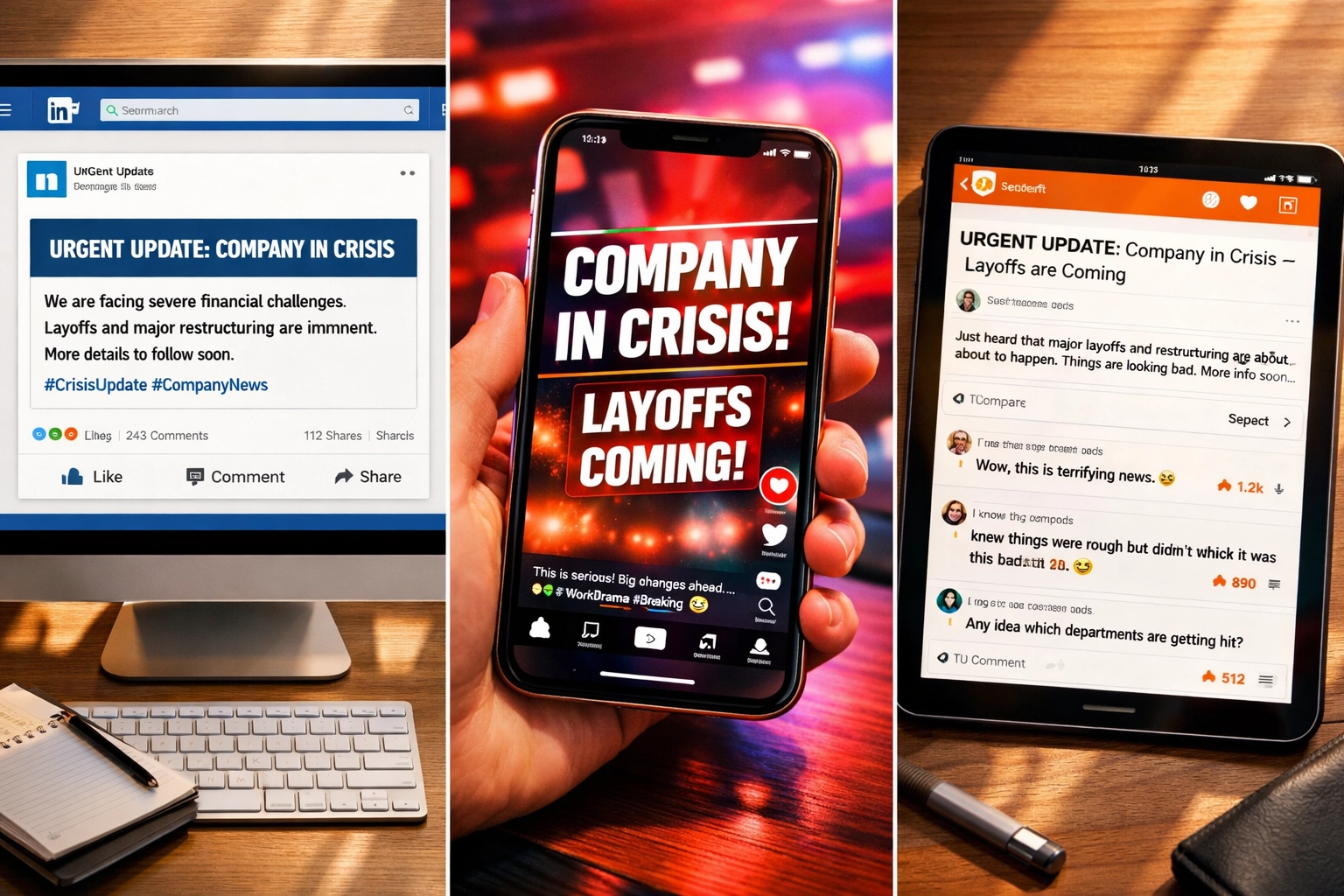
The rules of crisis communications have fundamentally changed. While your team is scheduling approval meetings and polishing press releases, your crisis is already trending on TikTok, being dissected on Reddit, and spawning conspiracy theories in Discord servers you didn't know existed.
The fragmented media landscape of 2026 doesn't just mean more platforms: it means completely different information ecosystems, each with its own speed, culture, and expectations. Companies still operating with crisis playbooks designed for a centralized media environment are learning this lesson the hard way, watching narratives spin out of control before their first official statement even goes live.
Here are the seven critical mistakes companies make when managing crises today: and more importantly, how to fix them.
Mistake #1: Moving at "Corporate Speed" in a Real-Time World
The Problem: Your crisis response timeline is built for a world that no longer exists. While your legal team reviews draft statements, your communications director schedules stakeholder calls, and executives debate word choices, the narrative about your company is already being written: without you.
In 2026, information moves at the speed of a screenshot. The time between an incident occurring and it becoming a full-blown social media firestorm has shrunk from days to hours, and sometimes minutes. Every second you spend in internal deliberations is a second someone else is controlling the story.
The Fix: Rebuild your crisis response protocols for real-time expectations. This doesn't mean rushing out unverified information, but it does mean having pre-approved frameworks that allow for rapid initial responses while you gather details.
Consider implementing a tiered response system: an immediate holding statement acknowledging awareness of the situation (within 1-2 hours), followed by substantive updates as information becomes available. Speed and accuracy aren't opposites: they're both necessary in today's environment.

Mistake #2: Using One Message Across All Platforms
The Problem: Too many companies treat social media as a broadcast channel, pushing identical corporate statements across LinkedIn, Twitter, Instagram, TikTok, and everywhere else. This approach fails to recognize that each platform has completely different cultures, norms, and user expectations.
A measured, formal statement might work on LinkedIn. That same statement on Twitter will be memed into oblivion. On TikTok, it'll be duetted with eye rolls. And on Reddit? It'll spawn a megathread dissecting every corporate phrase and questioning your authenticity.
The Fix: Develop platform-specific communication strategies. Your LinkedIn post can remain corporate and detailed. Your Twitter response should be direct and conversational. For platforms like TikTok or Instagram Stories, consider working with trusted micro-influencers (those with 1,000-100,000 followers) who can translate your message into authentic language that resonates with platform-specific communities.
This doesn't mean contradicting yourself across platforms: it means adapting your core message to match how different audiences consume information and communicate. Authenticity looks different on different platforms, and audiences can immediately detect when you're just broadcasting corporate speak.
Mistake #3: Keeping Your Own People in the Dark
The Problem: Nothing destroys internal trust faster than employees learning about a company crisis from social media instead of leadership. When your team finds out about bad news the same way the public does, you've created two crises: the external one and an internal morale catastrophe.
Employees who lack information: or worse, have different information than your public statements: become your biggest vulnerability. They're fielding questions from friends and family without answers, creating inconsistent messaging that undermines credibility.
The Fix: Brief internal stakeholders before going public. Your employees should always hear the news from leadership first, even if it's just minutes before the public announcement. Provide them with context, clear talking points, and explicit permission to direct questions appropriately.
When informed and empowered, employees become your most credible brand ambassadors. Their networks span multiple platforms and communities, and their personal endorsements carry more weight than any corporate statement. They're your first line of defense: but only if you actually keep them in the loop.
Mistake #4: Communicating Without Corrective Action
The Problem: Words without action are just noise. Too many crisis responses stop at "We take this very seriously" or "We're committed to doing better" without explaining what that actually means in practice. Audiences in 2026 are sophisticated enough to recognize empty corporate speak when they see it.
The Fix: Pair every communication with concrete corrective measures. If you're not ready to announce specific actions, explain your process for determining them and provide a clear timeline. Your audience wants to see consequences and change, not just contrition.
Be specific: "We're conducting a third-party investigation expected to complete by March 15th" beats "We're looking into it." Better yet: "We've immediately implemented [specific change], terminated our relationship with [vendor], and hired [consultant] to review our entire [process]."
Tangible actions demonstrate accountability. Vague promises demonstrate you're hoping the crisis blows over.
Mistake #5: Ignoring the Misinformation Ecosystem
The Problem: False information generates 70% more engagement than accurate information on social platforms. That's not just a statistic: it's the operating environment for crisis communications in 2026. By the time you issue your carefully verified statement, misinformation has already established the dominant narrative.
Emotion beats accuracy every single time in the information ecosystem. The angriest, most dramatic version of events will spread faster and farther than your measured, fact-based response. You're playing defense in a game where the rules favor your opponents.
The Fix: Implement real-time social listening tools that flag emerging narratives before they dominate. Don't wait for misinformation to become the accepted story: respond proactively to false claims as they emerge.
Even better: establish relationships with platform-specific micro-influencers before a crisis hits. When misinformation starts spreading, you'll have trusted voices ready to combat false narratives in real-time using language and formats that resonate with their communities. These influencers have credibility you simply cannot buy with corporate communications.

Mistake #6: Treating Speed and Accuracy as Opposites
The Problem: Many organizations operate under the false assumption that speed and accuracy are competing priorities: that you must sacrifice one to achieve the other. This mindset creates paralysis, with teams defaulting to slow, deliberate processes while crises spiral.
The old playbook of gathering every possible fact before issuing a carefully crafted press release simply doesn't work when information travels at light speed and misinformation travels even faster.
The Fix: Build organizational processes that allow for rapid response without sacrificing accuracy. This means having pre-established approval chains that can move in hours rather than days. It means empowering communications teams to issue holding statements while verification continues. It means treating speed as a feature of good crisis management, not a bug.
Balance speed with verification rather than treating them as opposing forces. You can acknowledge a situation quickly while promising verified details as they become available. What you can't do is stay silent for 48 hours while competitors, critics, and conspiracy theorists fill the information void.
Mistake #7: Going Silent After the Initial Response
The Problem: Crises don't resolve with a single statement, yet many companies issue one response and then disappear while "investigating" or "implementing changes." This information vacuum gets filled immediately: but not by you.
Stakeholders expect regular updates throughout a crisis. When you go silent, they assume the worst. Competitors, critics, and casual observers fill that silence with speculation, worst-case scenarios, and competing narratives. You've surrendered control of the story by treating the crisis as resolved when it's only just beginning.
The Fix: Commit to regular progress updates throughout the crisis resolution process. Even if the update is "Our investigation is ongoing and we expect preliminary findings by [date]," it's better than radio silence.
Keep stakeholders informed about investigation findings, implemented changes, and next steps. This ongoing communication maintains credibility and prevents others from controlling the narrative. It also demonstrates that you're actually doing something rather than hoping everyone forgets.
The companies that navigate crises successfully in 2026 aren't necessarily those with the biggest budgets or most polished statements. They're the ones who respond with speed, authenticity, platform-awareness, and genuine corrective action.
Your crisis communication strategy must match how information actually flows today: faster than you're comfortable with, across platforms you might not fully understand, to audiences who can instantly detect inauthenticity. The fragmented media landscape isn't going to consolidate. The only question is whether your crisis response will evolve to meet it.


Comments