.png)
Marty Supreme: How 360° Promotion Created a Hollywood Phenomenon


Source: A24 Films.
In an era where traditional movie marketing feels increasingly formulaic, A24's promotional campaign for "Marty Supreme" rewrote the playbook entirely. The indie studio's most expensive production to date: clocking in at approximately $70 million: generated over $27 million during its opening weekend, not through conventional trailers or critic screenings, but through a masterclass in 360° experiential marketing that turned promotion into performance art.
The campaign, centered around Timothée Chalamet's seemingly authentic viral moments, demonstrates how modern PR can transcend traditional boundaries to create genuine cultural phenomena. For communications professionals, "Marty Supreme" offers invaluable insights into the evolving landscape of audience engagement and brand storytelling.
Breaking the Traditional Marketing Mold
The "Marty Supreme" campaign deliberately abandoned every conventional movie marketing practice. No traditional trailers. No critic endorsements. No standard press junkets. Instead, the campaign embraced what industry analysts dubbed "marketing-as-performance": a strategy that blurred the lines between genuine moments and calculated promotion.
This radical departure wasn't just creative risk-taking; it was strategic positioning. In a saturated entertainment landscape where audiences scroll past countless movie advertisements daily, the campaign demanded attention through its very unpredictability. Each element felt like a genuine surprise rather than another marketing touchpoint.
The strategy recognized a fundamental shift in consumer behavior: modern audiences don't just want to be marketed to: they want to participate in cultural moments. By creating experiences that felt authentic and shareable, the campaign transformed passive viewers into active participants in the film's narrative.
The Viral Ecosystem Strategy
The campaign's genius lay in its interconnected web of viral moments, each building momentum for the next. Chalamet's appearance wearing a giant ping pong ball on his head wasn't just a random stunt: it was the opening move in a carefully orchestrated sequence designed to maintain constant cultural conversation.
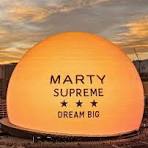
The orange blimp floating mysteriously across major cities created immediate intrigue without explanation. Pop-up shops selling branded jackets turned fans into walking advertisements. The Las Vegas Sphere activation: featuring Chalamet literally standing atop the massive digital display: generated both awe and social media gold.
Each element served multiple purposes: creating immediate viral content, generating earned media coverage, and building anticipation for subsequent activations. This layered approach ensured the campaign maintained momentum across multiple news cycles rather than relying on single-moment impact.
Authenticity as Currency
What separated "Marty Supreme's" campaign from typical celebrity stunts was its perceived authenticity. Jackie Brenneman, president and CEO of Attend Theatrical Marketplace, noted that audiences responded because "If you can feel the labor, you become drawn to it." The visible effort and genuine enthusiasm behind each activation made them feel like extensions of Chalamet's personality rather than corporate mandates.
This authenticity principle extended beyond the star's involvement. The campaign's "weirdness": from the table tennis tournament to the appearance on comedian Druski's podcast: felt genuinely eccentric rather than focus-group tested. Audiences could sense the creative risk-taking, which translated into emotional investment in the campaign's success.
The strategy tapped into audiences' growing skepticism toward traditional advertising. By making the marketing feel like genuine cultural participation, the campaign created what analysts called "obligational viewing": audiences felt compelled to experience the phenomenon firsthand.
From Promotion to Participation
Film data analyst Stephen Follows characterized the campaign's innovation as shifting "from promotion to participation." Rather than simply announcing the film's existence, each activation invited audience engagement. Social media users didn't just share content about the movie: they became part of the movie's story.
This participatory element proved particularly effective for an original, star-driven project. Unlike franchise films that rely on existing fan bases, "Marty Supreme" needed to create its own cultural moment. The campaign achieved this by making audiences feel like early adopters and co-creators rather than passive consumers.
The participatory strategy also generated valuable data insights. Each activation provided real-time feedback about audience engagement, allowing the team to adjust subsequent elements based on what resonated most effectively.
Experiential Marketing Excellence
The Las Vegas Sphere activation exemplified the campaign's experiential marketing mastery. Rather than simply purchasing traditional advertising space, the campaign transformed the venue itself into content. Chalamet's appearance atop the Sphere created a once-in-a-lifetime visual that no traditional advertisement could match.
Source: @martysupreme on Instagram.
These experiential elements served dual purposes: creating immediate spectacle for those present while generating shareable content for global audiences. The strategy recognized that modern marketing must work simultaneously for physical and digital audiences, creating moments that translate effectively across all platforms.
The experiential approach also demonstrated commitment to the film's quality. Audiences reasoned that studios wouldn't invest in such elaborate campaigns unless they believed strongly in the final product, creating positive assumptions about the film itself.
Digital Innovation and Cultural Timing
The campaign's success stemmed partly from perfect cultural timing. Launched during a period when audiences craved genuine moments amid increasing AI and digital manipulation, the campaign's visible human effort and creativity felt refreshingly authentic.
Social media integration wasn't an afterthought but the campaign's foundational element. Each activation was designed to generate organic sharing, creating exponential reach without additional media spend. The strategy recognized that modern audiences trust peer recommendations more than traditional advertising, making shareability crucial for success.
The campaign also leveraged Chalamet's existing social media influence strategically. Rather than simply posting promotional content, his platforms became venues for genuine surprise and delight, maintaining his authentic voice while serving promotional purposes.
Measurable Impact and Industry Influence
The campaign's $27 million opening weekend success validated its unconventional approach, but its influence extended far beyond box office numbers. Industry observers noted how the strategy successfully competed against major studio releases through creativity rather than budget scale.
The campaign generated extensive earned media coverage, with major outlets analyzing the strategy itself as much as the film. This meta-coverage amplified the campaign's reach while positioning "Marty Supreme" as a cultural phenomenon rather than simply another movie release.
More importantly, the campaign demonstrated viable alternatives to traditional marketing saturation. For an industry increasingly concerned about advertising effectiveness and audience attention spans, "Marty Supreme" provided a roadmap for authentic engagement.
Lessons for Modern PR Professionals
The "Marty Supreme" phenomenon offers several crucial insights for communications professionals. First, authenticity remains the most valuable currency in modern marketing. Audiences can detect genuine effort and creativity, rewarding campaigns that feel human rather than corporate.
Second, participation trumps promotion. Modern audiences want to be part of stories, not just recipients of messages. Creating opportunities for genuine engagement generates deeper emotional investment than traditional broadcasting approaches.
Finally, the campaign demonstrated how experiential marketing can transcend physical limitations. By designing moments that work equally well for present and digital audiences, modern campaigns can maximize impact across all touchpoints.
The success of "Marty Supreme's" 360° promotional strategy signals a fundamental shift in entertainment marketing. As traditional advertising becomes increasingly ineffective, campaigns that prioritize authentic engagement and participatory experiences will likely become the industry standard.
For PR professionals, the campaign offers both inspiration and practical guidance. In an attention economy where audiences have infinite options, the brands and projects that succeed will be those that create genuine reasons for participation rather than simply demanding attention. "Marty Supreme" didn't just promote a movie: it created a cultural moment that audiences wanted to join.


Comments